
In football, one moment can carry both heartbreak and triumph.
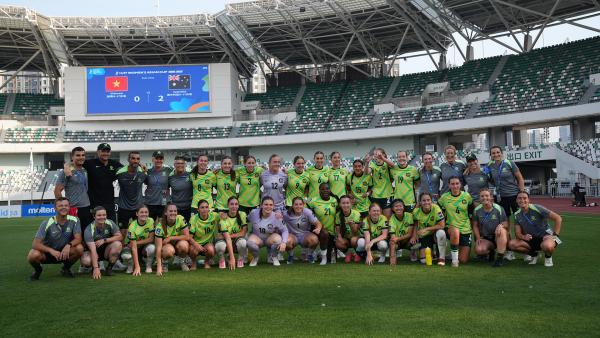
Australia watched the CommBank Matildas produce a stellar 2026 AFC Women’s Asian Cup™ campaign, arriving at the final against World No.5, Japan, undefeated.
75,000 fans packed out Accor Stadium to watch the Aussie underdogs take on the best team in Asia. Three-time Women’s Asian Cup and former Women’s World Cup Champions, Nadeshiko, had conceded only one goal the entire tournament.
The CommBank Matildas put on a gritty and determined performance in the final - some saying it was the best football they’d ever seen the team play. But it was not to be for Australia, who went down 1-0 to the tournament favourites.
In the devastation, there was also pride. Not only in the performance of the team, but in the knowledge that on the other side of the result, stood one of our own.
It was Leah Blayney - Assistant Coach for Japan.
Blayney has been a stalwart in Australian football for over two decades. Originally a Matilda herself (Cap #126), Blayney travelled the world playing football as a teenager.
She earned a sports scholarship in the US where she studied Education, while also playing for the Boston Breakers and later, Eskilstuna in Sweden. It wasn’t until a serious and degenerative ankle injury cut her playing career short, that she considered a career in coaching.
“As a player, I never actually thought I’d be coaching,” she admitted.
“I suffered a career-ending injury, so returned home and a good friend of mine and former coaching mentor, Rob Hutchinson, got me to speak to a group of players at Macarthur Rams who were playing in the Bathurst Cup.
“They were changing coaches at the time, and he asked me to come in and see if I liked it. Now, here we are.”
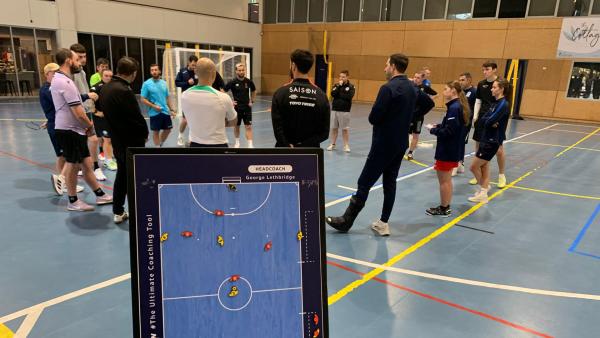
While completing her B, C and Pro coaching licences, Blayney also worked full-time as a teacher at Westfield Sports High School in Fairfield, New South Wales.
“I always pay credit to Westfield Sports High, in terms of my coaching development,” she said.
“There's a strong mentor there in Casey De Bruin, who made sure that I was coaching boys, getting in multiple sessions and a diversity of plays.
“I was developed under Casey for seven years, and he’s been one of my biggest influences.”
Blayney went on to excel across A-League Women and national team roles, from talent identification to technical leading, analysis and assistant coaching.
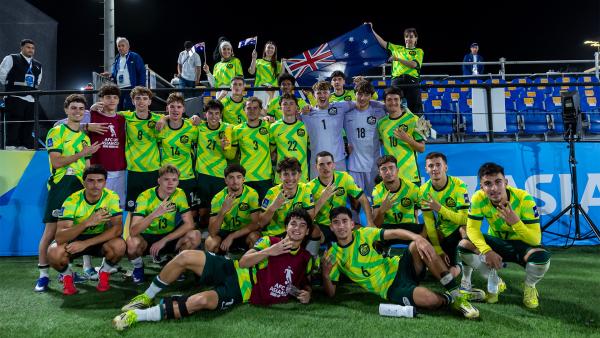
She led the Young Matildas as Head Coach for five years between 2019 and 2024, becoming the first female Australian coach to take a youth team to a World Cup. She was also the first woman to have both played in and coached at two World Cups.
Blayney also headed up the Future Matildas program, which produced current stars such as Kyra Cooney-Cross, Charli Grant and Clare Hunt. She later supported Interim Head Coach, Tom Sermanni, as Interim Assistant Coach with the CommBank Matildas.
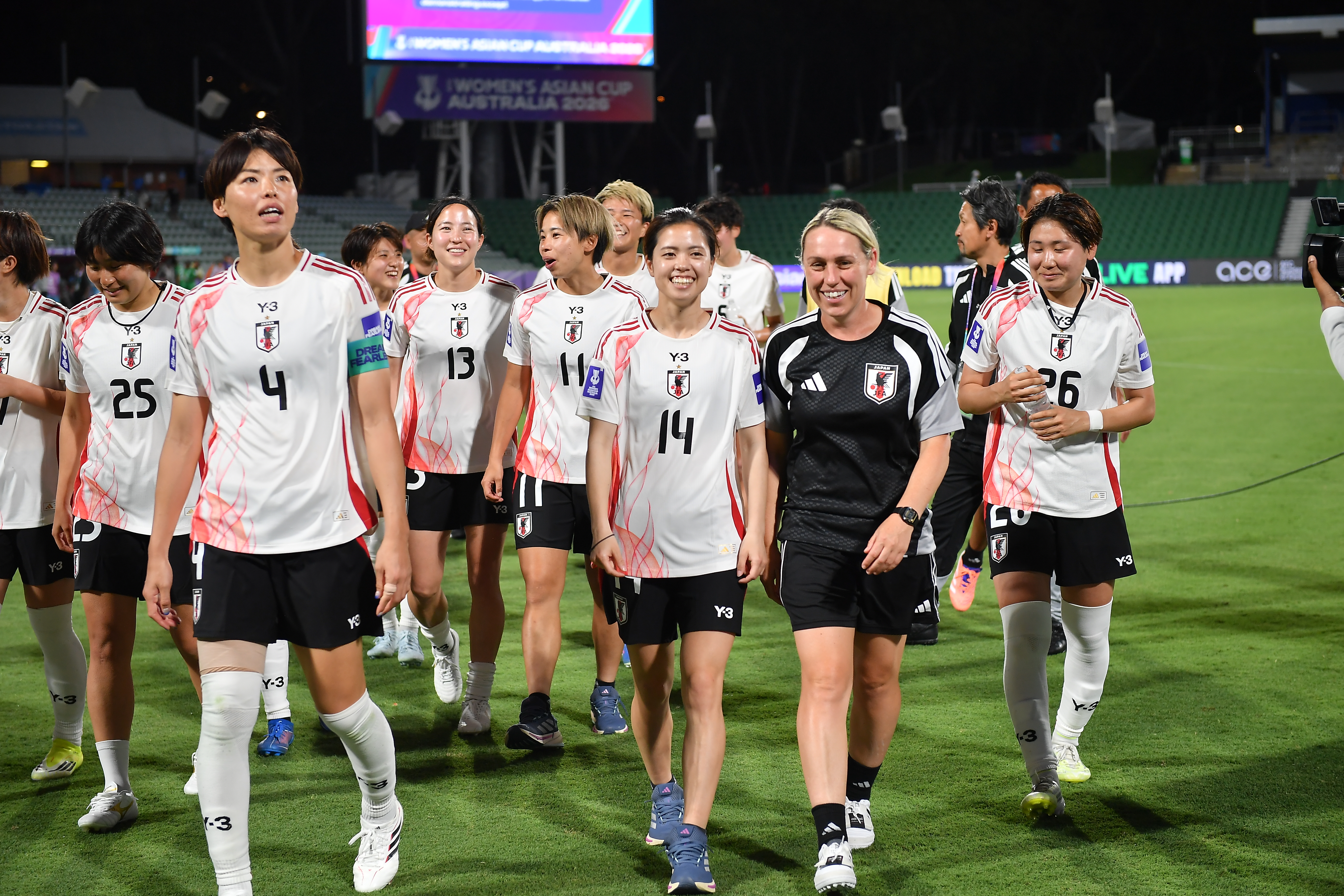
Looking back, Blayney said she couldn’t have imagined winning an Asian Cup nor seeing her former players excel the way they have, less than 18 months after leaving her former role.
“I didn't think I'd be here right now, to be honest,” she said.
“Even just seeing players like Charlie Rule and Kahli Johnson… Those kids breaking into the squad and playing in an Asian Cup final… I think it's incredible.
“Not just for myself in coaching, but for those players I’ve worked with as well.”
She also spoke highly of the CommBank Matildas’ performance throughout 2026 AFC Women’s Asian Cup™.
“They've got some world-class players, and they're an incredible group of humans, so I'm not surprised that they showed up in the final,” she said.
“That's the most pleasing thing. Their final game of the tournament was against one of the best teams in the world and it was their best performance. That's going to be so important for them going into the World Cup.
“Understandably, there's a lot of disappointment - it’s the same for all teams that compete in major tournaments around the world. Everybody puts in an incredible amount of work and have that desire to take home the trophy.
“I just hope that they take confidence moving forward, in the performance that they put out there, knowing that they can go toe-to-toe with teams like Japan and other world powers when they're on their game.”
Blayney also gave some insight into the mindset and identity of Japan, along with how it evolved going into the tournament.
“Japan has always had its identity and way of playing in terms of being super respectful, having a high football IQ and being technically excellent, but I think at this tournament, we saw a greater level of ruthlessness,” she said.
“Regardless of our opponent's world ranking, we approached every game with the utmost respect and desire to play at our best, and that's what allowed us to execute in each and every match - in terms of scoring goals.
“But the flip side of that, which the final showed, was that we're a team that is also defensively sound, and that's a step forward for us,” she continued.
“We know we're excellent with the ball, but to be able to see out a game when we're not at our best, there's huge development and learning in that.
“I think that's a level of resilience we've added from this tournament. When things aren't going our way, we know that defensively, we can grind out a result, and those are the characteristics of the best teams in the world.”
Japan Head Coach, Nils Nielsen, became somewhat of a fan favourite during the tournament, with his quips about bees and flies, his compliments towards Australian players and his criticism of Sydney’s bar closing hours.
Even with his light-hearted nature, it was clear he was a man with a plan - and it was executed to perfection.
“He's an incredible human being, and he's a big drawcard for why I joined Japan,” Blayney said of Nielsen.
“In terms of who he is as a person, what he stands for, and just how supportive he is of me as a female coach, you couldn't get a better person to work for and alongside.
“Obviously, Australia got to see a little bit of his humour and quirkiness. I live with it in camp every day. We spend a lot of time together. It certainly makes the experience enjoyable. He's just a top human.”
When asked how best to develop and retain the next generation of female coaches in Australia, Blayney said it all comes down to opportunity.
“I'm probably a bit of an anomaly in terms of my trajectory as a coach. Being a former player opened a lot of doors, but again, I worked hard at Westfield Sports High School – it was three or four sessions every day,” she said.
“We need to be creating opportunities for authentic experiences, where female coaches are in decision-making roles and are coaching multiple sessions a week.
“We have strong licensing structures and education, but at the end of the day, there have to be more opportunities where female coaches are in the A-Leagues coaching and running sessions and in our National Premier Leagues, leading teams. I think that's really important for us to produce great talent.”
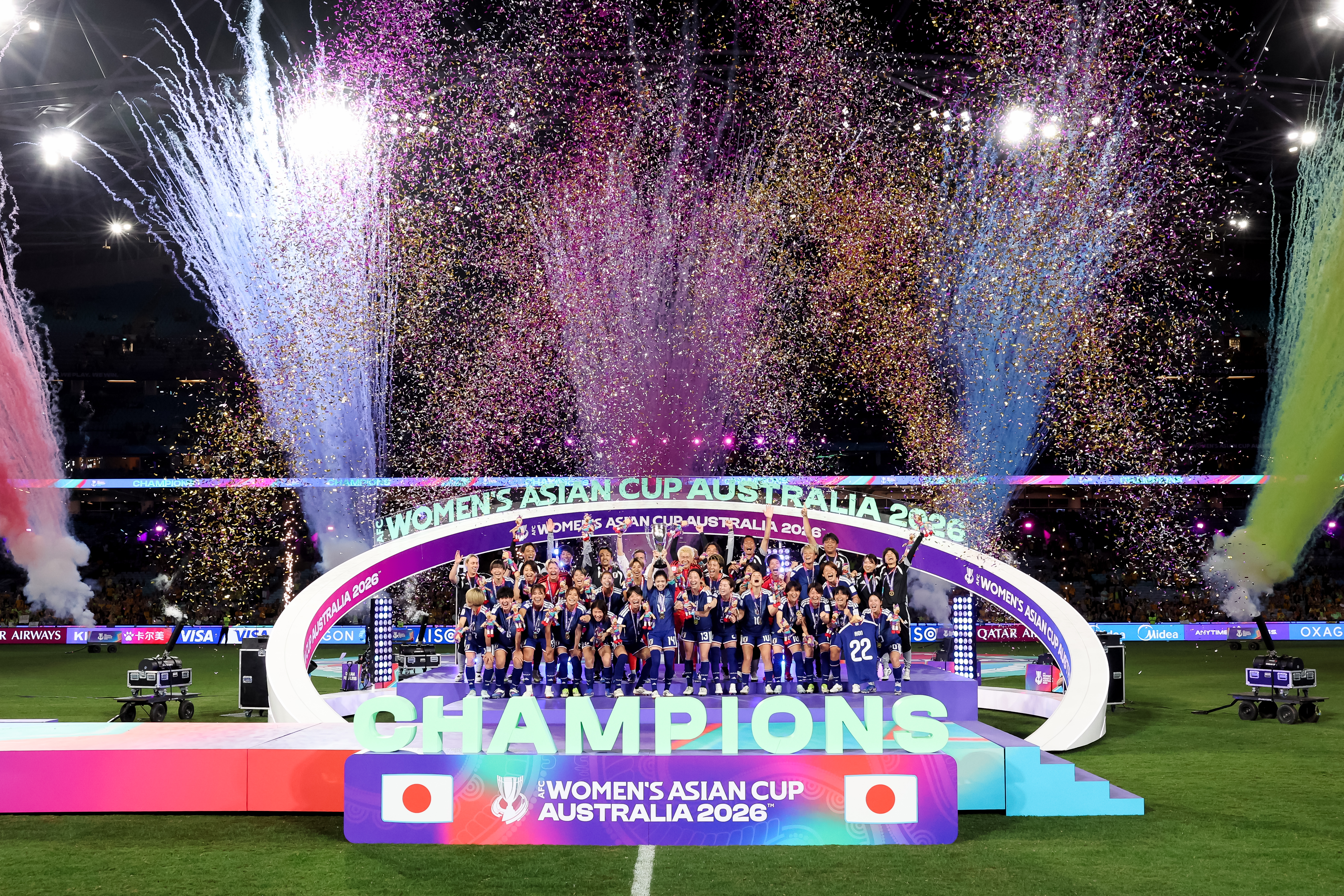
Although a loss to Australian football for now, Blayney speaks fondly of how significant her experiences at home have been in developing her into the coach she is today.
“It’s been enormous. Our work ethics as Australians are second to none,” she said.
“Going into that environment with Japan, I was able to fit in quite easily in terms of expectations and processes and I think that's because in Australia, we're used to wearing many hats.
“We can do the analysis, the scouting and the coaching, and that makes us attractive to clubs and other countries.
“I actually am grateful for the exposure to multiple jobs at different times, because it made me a better coach.”
In terms of what success looks like for Blayney, she’s keeping it simple.
“I'm just focusing on being happy and enjoying what I'm doing. That's the ultimate goal,” she said.
“I enjoy the environment. The group of players we're working with are incredible. Where that takes me? I guess we will see, but I'm certainly very ambitious, and want to go as far as I can in coaching, as long as I'm enjoying it. That's what matters most.”